Ultra-slow EEG & stillness
Investigate long-duration recordings with appropriate DC-sensitive acquisition and controls for drift, movement and physiological artefacts.
Research Laboratory · IFEN Neuroscience
Reliable research begins before the first recording. We help universities and research teams choose appropriate technology, design experiments, train personnel and interpret EEG data with methodological care.
Research focus / 01
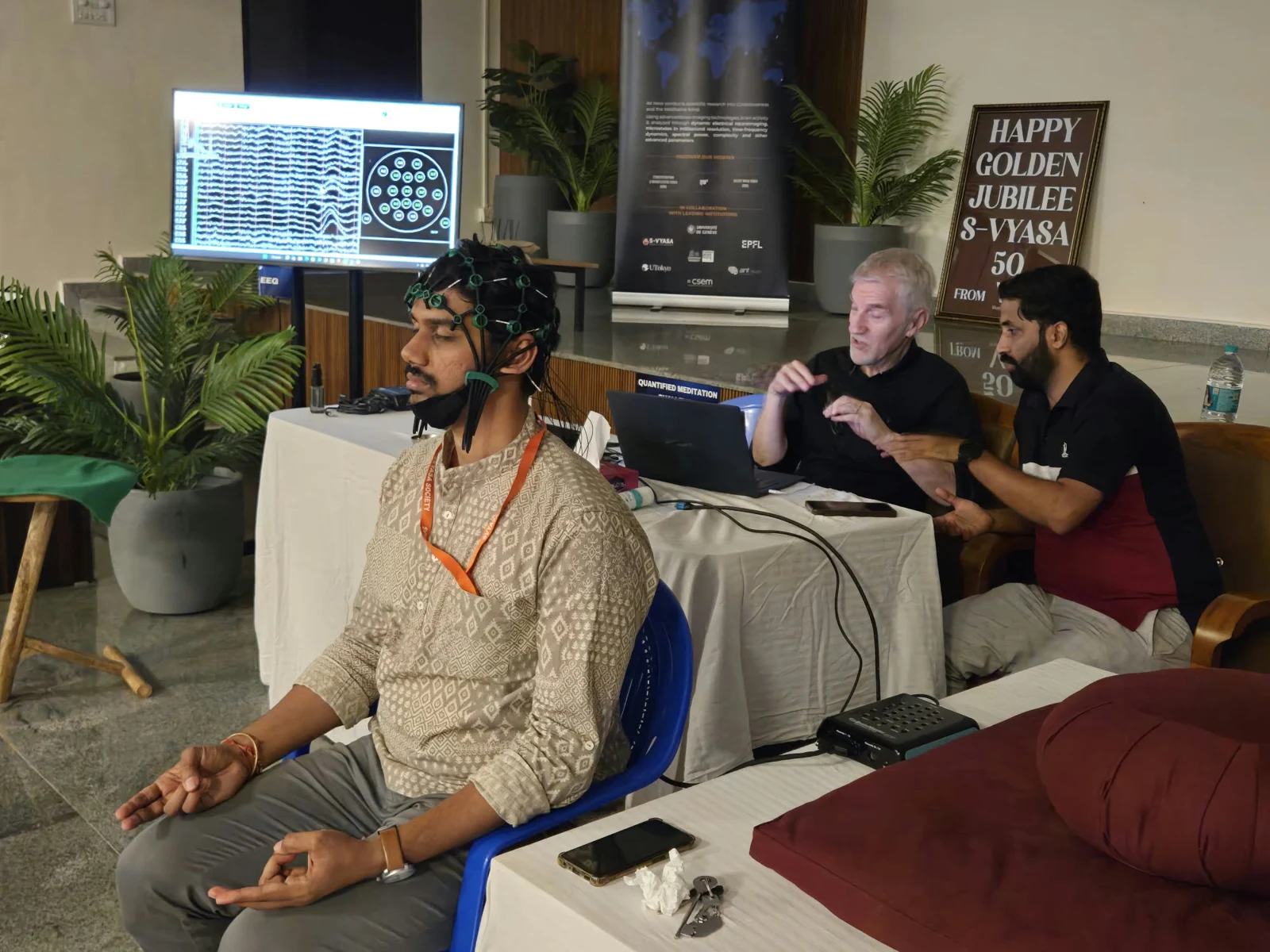
Our research interest is to characterise meditation-related changes in electrophysiology and distinguish them from changes in vigilance, sleep onset and artefacts. We are interested in experienced practitioners, repeated recordings and carefully defined meditation conditions.
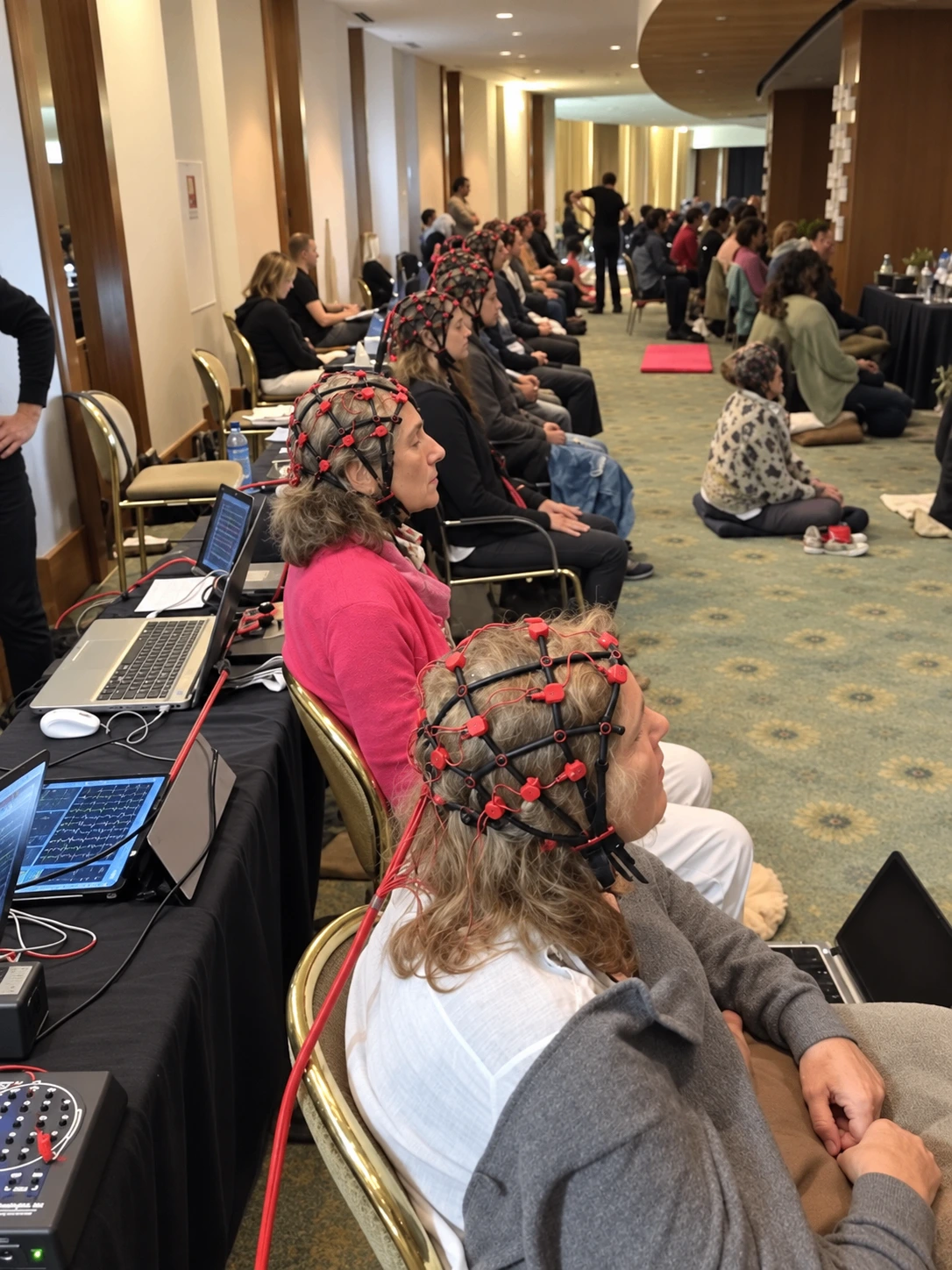
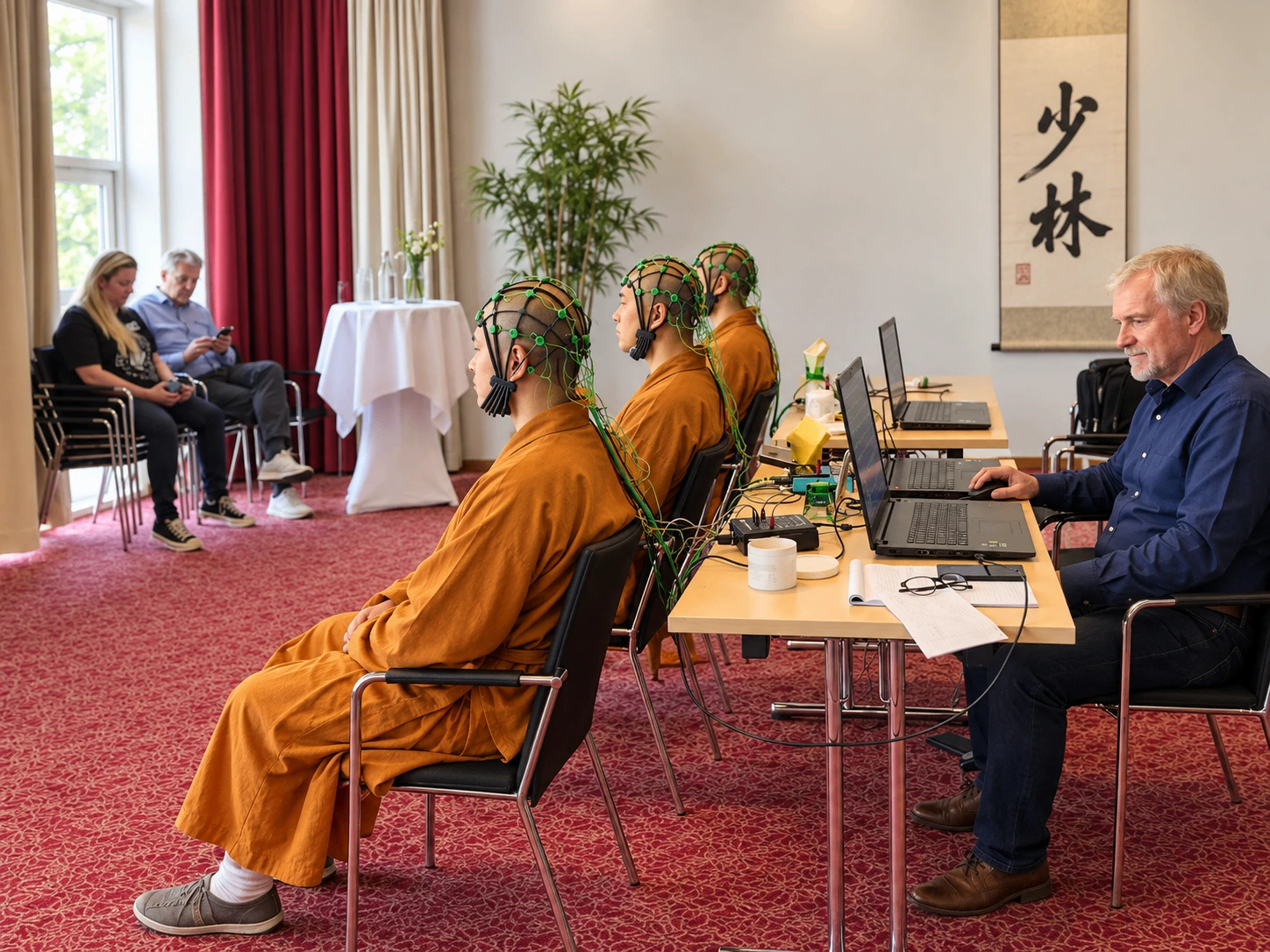
Investigate long-duration recordings with appropriate DC-sensitive acquisition and controls for drift, movement and physiological artefacts.
Study temporal organisation and transitions across meditation conditions and matched baselines.
Explore P300 and other task-related measures before and after meditation under standardised conditions.
Separate oscillatory peaks from the aperiodic spectral background; assess changes in individual frequencies and connectivity.
Compare reported meditation experiences with electrophysiology, raw EEG, vigilance markers and, where available, autonomic recordings. EEG alone cannot establish a specific state of consciousness.
Experimental design, measurement configurations and meaningful analytical parameters.
Training, standardised recording procedures and signal quality.
Raw EEG inspection, artefact evaluation and advanced EEG / ERP analysis.
Joint evaluation, methodological limitations and reporting of findings.
Spectral power, individual alpha frequency, asymmetry and normative comparison where appropriate.
P300, CNV, MMN and VEP; amplitudes, latencies and time-frequency analysis according to the paradigm.
Scalp topographies, duration, occurrence, coverage and transitions.
Coherence, phase relationships and wPLI where appropriate; account for reference and volume conduction.
Low-resolution source estimates with explicit spatial and modelling limitations.
Spectral parameterisation (specparam/FOOOF) to distinguish oscillatory peaks from the aperiodic background.
Long-duration and DC-sensitive acquisition where appropriate; control drift and non-neural artefacts.
Nonlinear time-series measures including Higuchi fractal dimension.
EEG, ECG, HRV and exploration of heartbeat-evoked potentials under suitable conditions.
International 10–20 System
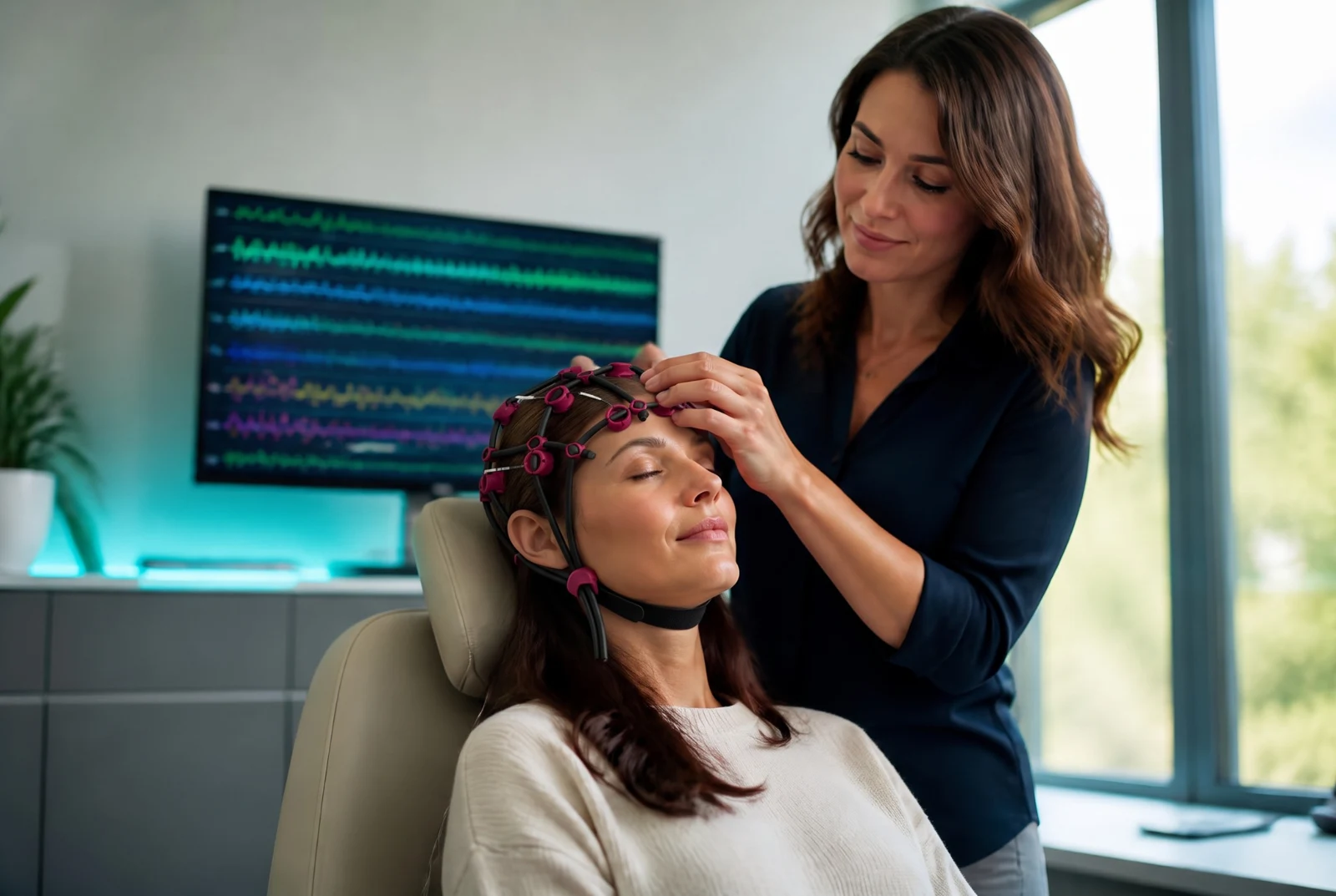
The 19 standard scalp positions of the international 10–20 system offer a practical foundation for many research questions. More channels can be valuable when the scientific question demands them; channel count alone does not determine data quality.
Many conventional QEEG reference datasets, including standard NeuroGuide and QEEG-Pro configurations, use these electrode positions. Acquisition, reference, preprocessing and population must match the database.
A common electrode layout supports repeated measurements and cross-study comparison when recording and analysis protocols are matched.
19 channels can support spectral analysis, ERP, microstates, connectivity and low-resolution source imaging, depending on the scientific question.
Manageable preparation and recording procedures can facilitate repeated and long-duration studies and training of local teams.
High-density EEG is preferable when detailed spatial sampling or precise source localisation is central to the study. Nineteen channels are not equivalent to 64, 128 or 256 channels in spatial resolution.
Investigation of frequency-band training, live Z-score training, slow cortical potentials (SCP) and sLORETA-based approaches to map self-regulation processes in the EEG and refine training protocols.
Scientific examination of non-invasive stimulation approaches and their combination with EEG measurement and neurofeedback.
Analysis of resting-state EEG patterns, microstates and time-locked stimulus responses (e.g. P300, Go/No-Go paradigms) to objectify attention and information processing.
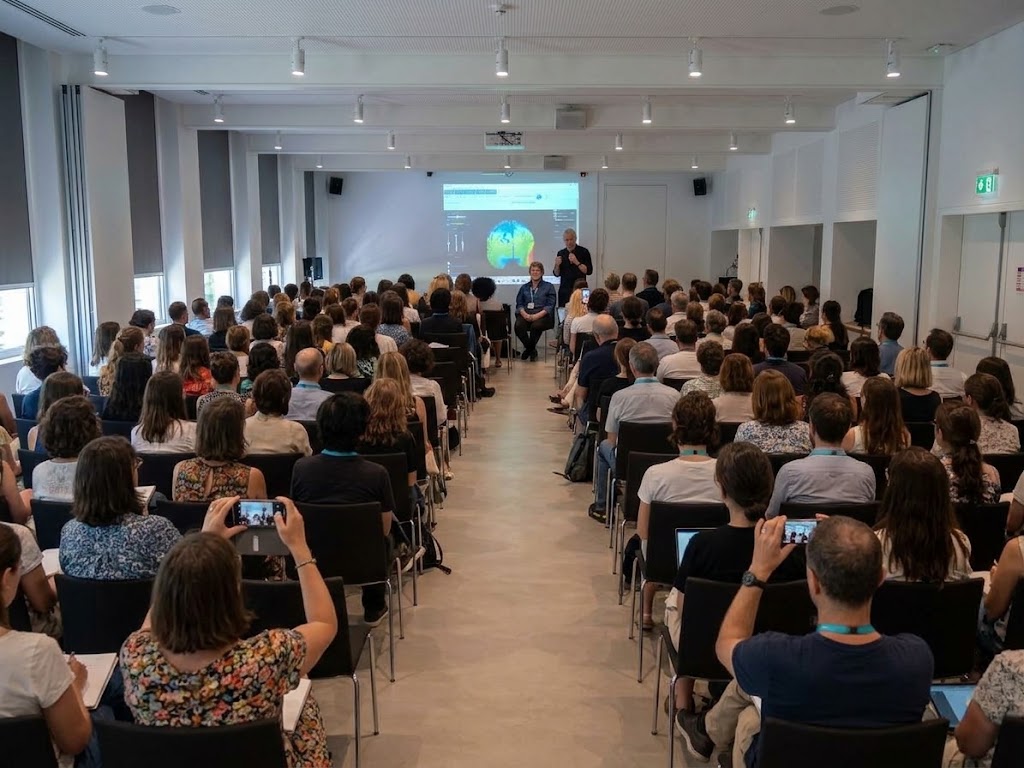
CAPiTO validation and ERP studies with international partners
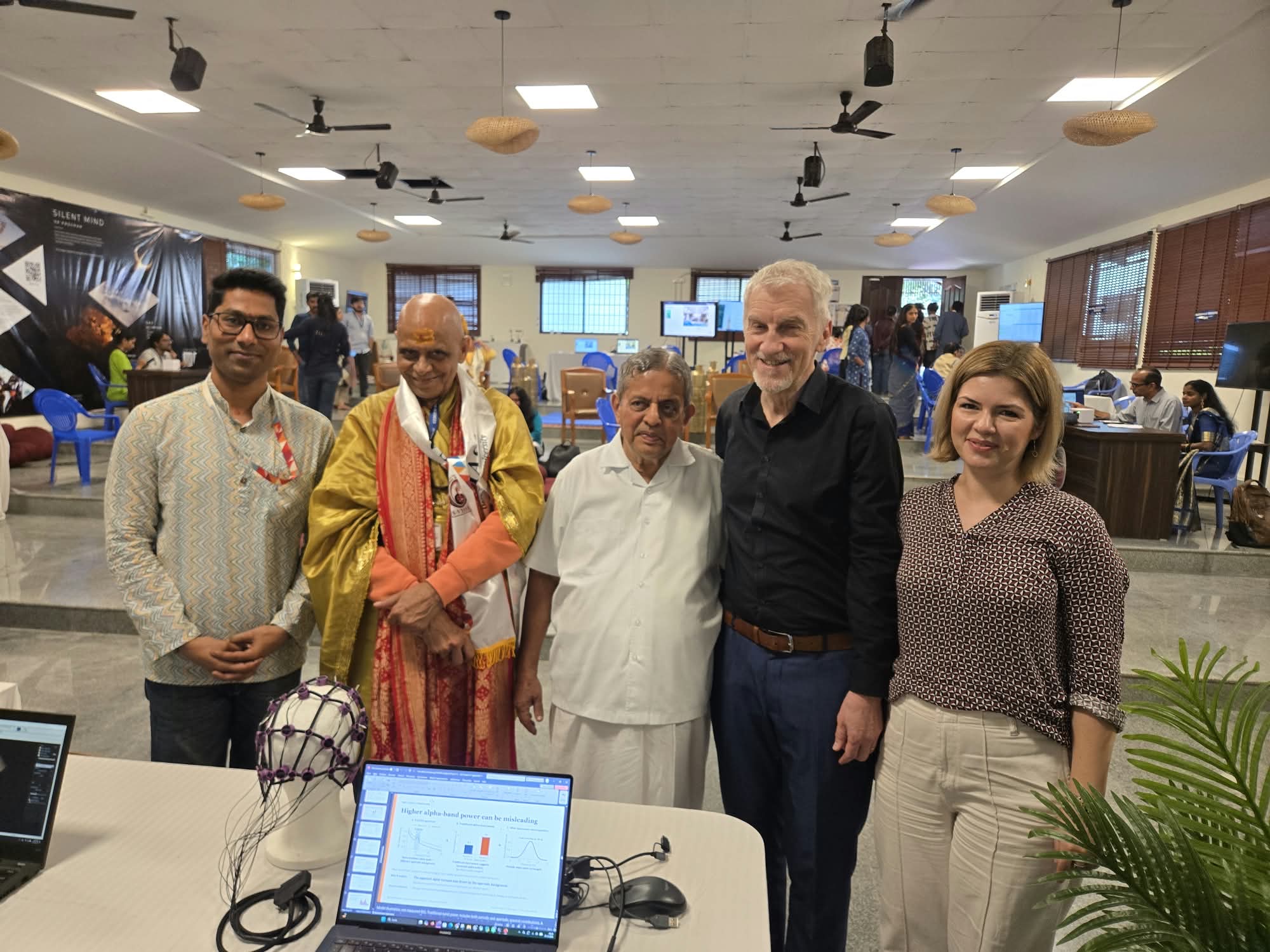
Recording and analysis of EEG correlates of meditative states — including long-term collaboration with Dr Joe Dispenza's research team (over 10,000 brain maps) and S-VYASA University in Bengaluru.
Neuromeditation studies and simultaneous group EEG recordings
Studying neurophysiological patterns during sustained concentration, athletic and cognitive performance, and flow states.
Examining how attention, retention and information processing appear in the EEG and how feedback methods can support learning processes.
Analysis of heart–brain interaction, heart-evoked potentials (HEP) and autonomic regulation — including collaboration with Dr Rollin McCraty.
Heart–brain coupling during emotional stimuli and self-regulation
Scientific inquiry into sleep architecture in the EEG, preventive self-regulation and transcranial photobiomodulation strictly as a research topic (without medical efficacy claims).
T. F. Feiner [vollständige Autor:innenliste folgt mit Druckausgabe]
T. F. Feiner et al.
T. F. Collura, T. F. Feiner, A. W. Keizer, R. Perez-Elvira, S. Warner
Ikhlaq et al., mit T. F. Feiner, R. McCraty, M. Atkinson
T. F. Collura, T. F. Feiner
T. F. Feiner
T. F. Feiner
Planning a study involving qEEG, ERP or neurofeedback, or looking for methodological support? We welcome scientific exchange.